

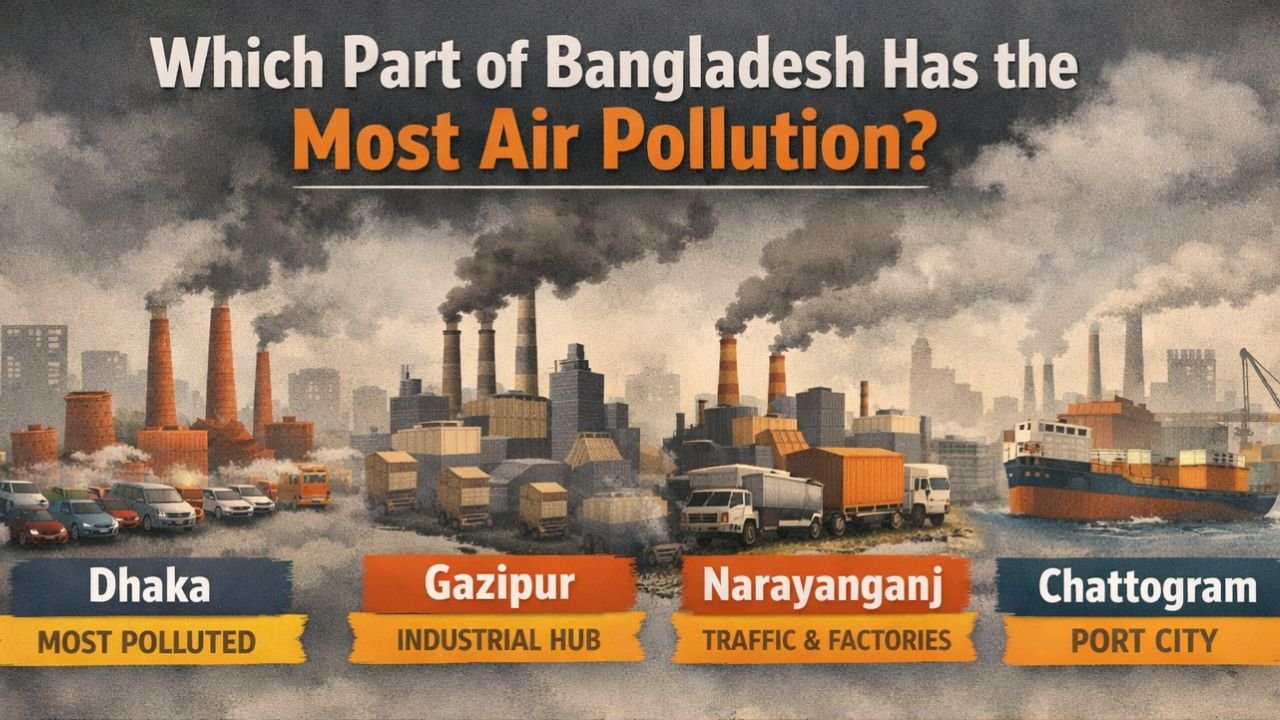
Air pollution has become one of the most serious environmental and public health concerns in Bangladesh. Every year, millions of people are exposed to harmful air that affects breathing, heart health, and overall quality of life. Many people often ask which part of Bangladesh has the most air pollution, and the answer is strongly linked to urbanization, industrial growth, and traffic congestion.
Dhaka: The Most Air-Polluted Area in Bangladesh
Dhaka is widely recognized as the most air-polluted part of Bangladesh. The capital frequently ranks among the world’s cities with the worst air quality, especially during the dry season.
The main reason Dhaka suffers from extreme air pollution is its dense population combined with unplanned development. Brick kilns, construction dust, vehicle emissions, and industrial smoke continuously release fine particulate matter (PM2.5) into the air. These tiny particles easily enter the lungs and bloodstream, creating severe health risks.
Gazipur: Industrial Pollution Hotspot
Gazipur is another highly polluted area in Bangladesh. Located near Dhaka, Gazipur hosts thousands of garment factories, textile mills, and manufacturing plants.
Most factories rely on fossil fuels and often lack modern emission control systems. As a result, industrial smoke and chemical gases significantly degrade air quality. People living in Gazipur commonly experience respiratory problems and eye irritation due to long-term exposure.
Narayanganj: Pollution from Industry and Traffic
Narayanganj is known as an industrial hub, but this development comes at a cost. The concentration of factories, combined with heavy truck movement and river port activities, contributes heavily to air pollution.
Unregulated industrial waste burning and outdated vehicles increase levels of toxic gases, making Narayanganj one of the most polluted urban areas in the country.
Chattogram: Port and Industrial Emissions
Chattogram also experiences high air pollution, though slightly lower than Dhaka. The main sources include port operations, ship emissions, steel mills, and cement factories.
Because Chattogram is a coastal city, sea breeze sometimes helps disperse pollutants. However, industrial zones and traffic congestion still make air quality unhealthy on many days.
Seasonal Impact on Air Pollution in Bangladesh
Air pollution in Bangladesh becomes much worse during the winter season. From November to March, rainfall is low, and dust from construction sites and roads remains suspended in the air.
During this period, Dhaka and surrounding industrial districts consistently record “very unhealthy” or “hazardous” air quality levels, making winter the most dangerous time for outdoor activities.
Health Effects in Highly Polluted Areas
Living in the most air-polluted parts of Bangladesh increases the risk of:
- Asthma and chronic respiratory diseases
- Heart disease and stroke
- Reduced lung development in children
- Eye, nose, and throat irritation
Long-term exposure can shorten life expectancy, especially for elderly people and children.
In summary, Dhaka is the most air-polluted part of Bangladesh, followed closely by Gazipur and Narayanganj. These areas combine heavy traffic, uncontrolled industrial emissions, and constant construction activities, making air pollution a year-round threat.
Addressing this issue requires stricter environmental regulations, cleaner transportation systems, and greater public awareness to protect both human health and the environment.
Leave a Reply