
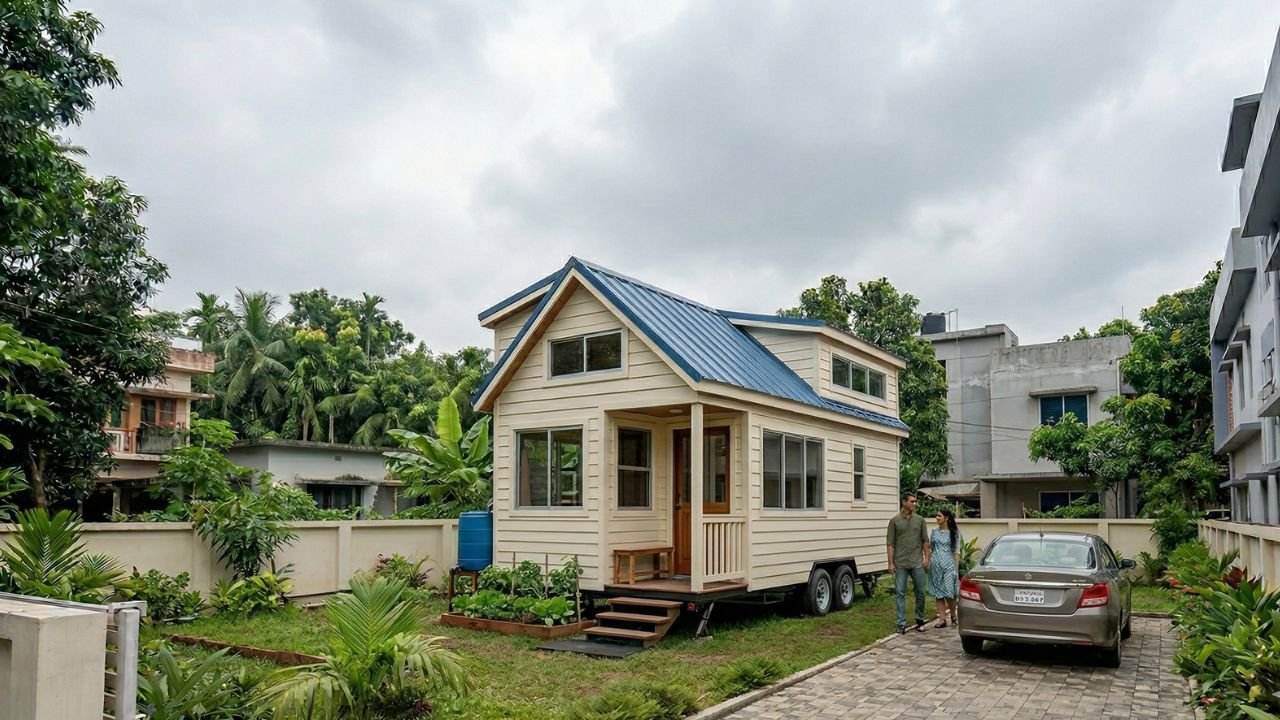
The tiny house movement has captured the imagination of many, from minimalists to eco-conscious homeowners. However, before you start designing your dream micro-home, a fundamental question needs to be answered: what square footage is considered a tiny house? It’s a query that is not just about semantics; understanding the official size limits is crucial for navigating building codes, zoning laws, and even securing financing. The answer is more nuanced than a single number, but we will break it down precisely for you here.
The Official Standard for a Tiny Home
When it comes to a definitive answer, the real estate and building industry looks to the International Residential Code (IRC). According to Appendix AQ of the 2021 IRC, a tiny house is officially defined as a dwelling unit that is 400 square feet (approximately 37 square meters) or less in floor area, excluding lofts. This 400-square-foot ceiling serves as the primary benchmark across the United States.
Why is this definition so important? Because the IRC provides the safety standards that most local jurisdictions adopt. If your home is under this size, it can be held to specific, slightly modified building codes that recognize the unique challenges of small spaces, such as lower ceiling heights in lofts. If you exceed this figure, your structure is generally treated as a standard, albeit small, single-family residence and must comply with all typical building requirements.
The Typical Size Range and Distinctions
While the absolute maximum is set at 400 square feet, the vast majority of tiny houses fall into a narrower band. Most tiny houses on the market today range between 100 and 400 square feet. Anything smaller than 100 square feet is often referred to as a “micro-shelter,” which is more suitable for a backyard office than full-time habitation.
It is also helpful to distinguish a tiny house from a “small house.” Although the terms are sometimes used interchangeably, there is a clear distinction in professional circles:
- Tiny House: 400 sq. ft. or less.
- Small House: 400 to 1,000 sq. ft.
This distinction matters for builders and buyers alike, as the building codes, costs, and design strategies differ significantly between these two categories.
On Wheels vs. On Foundation: Does It Matter?
The square footage definition remains consistent, but the configuration of the home introduces further limitations. There are two primary types of tiny houses, and the “on wheels” variant faces additional physical constraints:
- Tiny House on a Foundation: This is a stationary structure built on a permanent base. While the internal floor plan is limited to 400 sq. ft., designers have significant flexibility in shaping the layout. Common dimensions for a foundation-based tiny house include 20 feet by 20 feet or 16 feet by 24 feet.
- Tiny House on Wheels (THOW): These homes are built on a trailer chassis, which imposes strict size limits for road legality. A THOW must be no wider than 8 feet 6 inches and no taller than 13 feet 6 inches to be safely towed. The length is often capped at 40 feet, resulting in a maximum interior square footage of around 350 feet.
Local Variations and Legal Nuances
Here is where things get tricky. While 400 square feet is the industry standard, local governments are free to establish their own rules. Some cities have created specific zoning overlays for tiny home communities, while others have set minimum size requirements that effectively ban them.
For instance, some municipal codes require a tiny house on a permanent foundation to have a minimum of 200 square feet to be considered a legal residence. In other areas, an accessory dwelling unit (ADU) could be as large as 800 square feet and still be regulated under tiny house ordinances.
Always check with your local planning department before you start building. The official definition in your county might differ from the IRC, and failing to comply can result in fines or being forced to move your home. Additionally, many standard mortgage lenders do not finance homes under 400 square feet, so you may need to seek out specialized lenders or pay in cash.
Is a Tiny House Right for You?
Now that you understand what square footage qualifies as a tiny house, you can better assess if this lifestyle is a genuine fit. Living in 400 square feet or less requires a serious commitment to decluttering and multi-functional design. However, the reward is a significantly lower carbon footprint, reduced maintenance, and financial freedom from a traditional mortgage. It is not just about the size; it is about how you choose to use the space you have.